
Pink Eye vs. Stye – What’s the Difference?
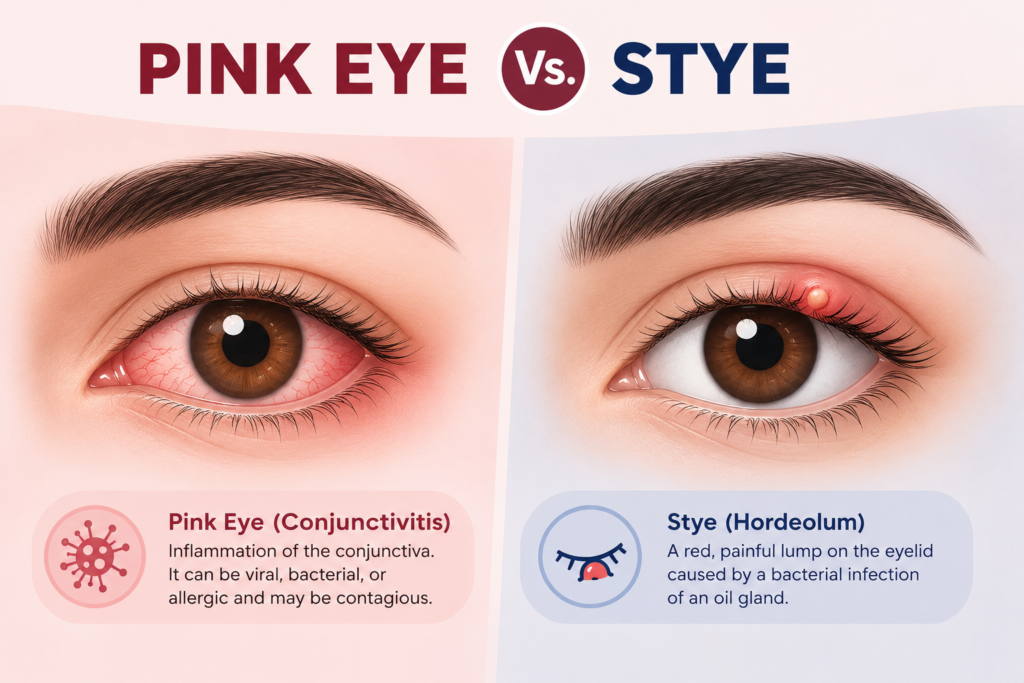
As you experience eye discomfort, you may wonder if it’s pink eye or a stye causing your irritation. It can be challenging to tell these eye conditions apart, but understanding the differences between them is essential to receive proper treatment. At InSight Vision Center, we provide comprehensive eye care services, including treatment for pink eye and stye.
Let’s take a closer look at the symptoms, causes, and treatments for these eye problems.
Pink Eye vs. Stye at a Glance
The fastest way to tell these two conditions apart is location. Pink eye affects the surface of the eye and the inner lining of the eyelid, producing widespread pink or red across the white of the eye. A stye affects the eyelid itself, producing a single tender lump at the lash line. The table below sets out the practical differences.
| Pink Eye (Conjunctivitis) | Stye (Hordeolum) | |
|---|---|---|
| What it affects | The conjunctiva — the clear membrane covering the white of the eye and lining the inner eyelid | An oil gland or eyelash follicle at the edge of the eyelid |
| Main visual sign | Widespread pink or red across the white of the eye, with no lump | A single red, pimple-like lump at the lash line |
| How it feels | Itching, burning, grittiness across the whole eye | Distinctly tender or painful when the lump is touched |
| Discharge | Watery with viral, thick and yellow-green with bacterial, stringy with allergic | Little or none until the lump comes to a head and drains |
| Usual cause | A virus, bacteria, or an allergen such as pollen or dust | Bacteria, usually Staphylococcus aureus, trapped in a blocked gland |
| Contagious? | Sometimes. Viral and bacterial spread easily; allergic does not spread at all | No. Not passed person to person through ordinary contact |
| One eye or both? | Often starts in one eye and spreads to the other | Usually one eyelid at a time |
| Typical duration | A few days to two weeks, depending on the cause | Around seven to ten days with warm compresses |
| First-line care | Depends on the cause — cool compresses, artificial tears, antihistamines, or prescribed antibiotic drops | Warm compress for 10 to 15 minutes, three to four times daily. Never squeeze or pop it |
What is Pink Eye?
Pink eye, also known as conjunctivitis, is inflammation of the conjunctiva — the thin, transparent membrane that lines the inside of your eyelid and covers the white of your eye. When the small blood vessels in this membrane become inflamed, they show through more clearly and give the white of the eye its pink or reddened appearance.
Conjunctivitis can be caused by a virus, by bacteria, or by an allergen such as pollen, dust or pet dander. Whether pink eye is contagious depends entirely on which of these is behind it: viral and bacterial conjunctivitis spread easily from person to person, while allergic conjunctivitis does not spread at all.
What Is a Stye (Hordeolum)?
A stye, or hordeolum, is a red, painful lump that usually forms on your eyelid near an eyelash. It is caused by a bacterial infection that occurs when a clogged oil duct leads to bacterial buildup. The lump can last a few days without any treatment. In some cases, the stye may be deeper in the eyelid and require medical attention.
What is the Difference Between Pink Eye and a Stye?
Both pink eye and stye share similar symptoms, such as itching, redness, and soreness. However, a lump on the eyelid is a unique indication of a stye. It can be challenging to differentiate between conjunctivitis (pink eye) and a stye, particularly in the early stages.
Symptoms of Pink Eye vs Stye
What are the Symptoms of Pink Eye?
- Redness in the eye and the surrounding area
- Sticky discharge from the eye
- Irritation in the eye
- Inflammation in the eye
- Itching in and around the eye
- Watering eyes
What are the Symptoms of a Stye?
- Redness in the eye
- Tenderness in the eye
- Inflamed eyelid
- Crusty discharge from the eye
- Eyelids hanging down
- A small, reddish, and sometimes painful bump on the eyelid
Causes of Stye Eye vs. Pink Eye
The critical difference between pink eye and a stye is the cause behind each condition. Although both are common eye infections, their causes are quite different.
What are the Causes of Conjunctivitis?
The three primary forms of conjunctivitis are viral, allergic, and bacterial. Each can come from different sources. Nonetheless, some of the most frequent causes of pink eye are as follows:-
- Viral infections like the flu or a cold
- Triggered allergies from chemicals, dust, smoke, pollen, etc.
- Bacterial infection
- Foreign objects falling inside the eye
- Exposure to irritants such as cleansers, contact lenses, or cosmetics
What are the Causes of a Stye?
A stye is an inflammation or infection at the base of an eyelash follicle or oil gland on the eyelid that is caused by bacteria. You can be at risk of getting a stye if you do things like:
- Sleeping with eye makeup on
- Rubbing and touching your eyes too often
- Maintaining overall poor eye hygiene
- Wearing contact lenses longer than their ideal duration
Is a Stye Contagious? Is Pink Eye Contagious?
This is where the two conditions differ most, and it is the question patients ask us most often. A stye is not contagious. Pink eye may or may not be, depending on what caused it — viral and bacterial conjunctivitis spread readily from person to person, while allergic conjunctivitis cannot spread at all.
Are Styes Contagious?
No. Styes are not contagious in the ordinary sense, and you cannot catch one from being near someone who has one, shaking hands, or sharing a room. A stye is a localised infection of an oil gland in your own eyelid, and the bacteria responsible — most often Staphylococcus aureus — already live harmlessly on nearly everyone’s skin and eyelids. A stye forms only when those bacteria become trapped inside a gland that has become blocked.
Because the bacteria are already your own, there is no need to isolate yourself, stay home from work, or keep a child home from school because of a stye alone.
Two practical qualifications are worth knowing:
- Bacteria can transfer, even though the stye cannot. Sharing towels, pillowcases, washcloths or eye makeup can pass bacteria to another person. That rarely produces a stye in them, because their eyelid defences usually handle it, but it is still worth avoiding.
- You can give yourself a second stye. Touching or rubbing the affected eye and then the other eyelid can introduce bacteria to a second gland. The original stye does not migrate or spread — a new one forms. Wash your hands before touching either eye, and use a separate clean cloth for each eye when applying warm compresses.
Is Pink Eye Contagious?
It depends on the type. Two of the three forms of conjunctivitis are contagious and one is not, which is why an accurate diagnosis matters more with pink eye than with a stye.
- Viral conjunctivitis — highly contagious. The most common form. It spreads much like a common cold, through respiratory droplets and contaminated hands or surfaces, and remains contagious for as long as the eyes are red and weeping. This can last one to two weeks.
- Bacterial conjunctivitis — contagious. Spreads through direct contact with eye discharge or contaminated items. When antibiotic drops are prescribed, it is generally no longer considered contagious around 24 to 48 hours after treatment begins.
- Allergic conjunctivitis — not contagious. This is a reaction to pollen, dust, pet dander or another allergen. It cannot pass to anyone else, and it commonly affects both eyes at once and recurs seasonally.
How to Avoid Spreading Pink Eye
If your pink eye is viral or bacterial, these steps reduce the risk of passing it on:
- Wash your hands thoroughly and often, particularly after touching your eyes or face
- Avoid touching or rubbing the affected eye, and avoid touching the unaffected eye afterwards
- Do not share towels, washcloths, pillowcases, eye drops or eye makeup
- Wash pillowcases, towels and washcloths in hot water and change them daily
- Discard any eye makeup used while the infection was active, and replace contact lenses and cases
- Stay home from work, school or daycare while the eye is actively discharging, or follow your doctor’s guidance on when it is safe to return
Not sure whether it’s a stye, pink eye, or something else?
A short eye exam settles the question and makes sure you get the right treatment. InSight Vision Center’s ophthalmologists see patients across Fresno.
Treatment for Pink Eye vs. Stye
Viral or bacterial pink eye and stye usually resolve on their own in one to two weeks. However, seeking medical attention from an eye specialist is recommended if the symptoms aggravate, affect eyesight, or alter the appearance of the eyes.
What are the Treatment Options and Remedies for Pink Eye?
- Apply warm or cold compresses
- Avoid wearing eye makeup and contact lenses until your pink eye gets cured
- Take allergy medications if needed
- Get OTC pain relievers, eye drops, or ointments if you feel discomfort
- Ask your doctor if antihistamines can help you avoid the symptoms of pink eye.
- Also, remember not to share your things, like a towel and linens, with anyone to avoid spreading the infection
What are the Treatment Options and Remedies for a Stye?
- Apply warm compresses to the eyes and the eyelids
- Don’t wear contact lenses or eye makeup when you have a stye
- No matter how tempting, never pop a stye
- Get the OTC pain reliever and eye ointment if required
- In chronic cases, you may need to take prescribed medicines, get a steroid shot, or even surgically remove the stye. However, these are all rare scenarios.
Preventing Conjunctivitis and Stye
At InSight Vision Center, we believe that preventing eye infections is an essential part of maintaining good eye health. While it’s not always possible to avoid getting pink eye or a stye, following some simple preventive tips can help reduce your risk of getting these infections.
How to Prevent Pink Eye?
- Wash your hands before and after touching your eyes to avoid getting pink eye.
- Avoid allergens that could give you pink eye if you are prone to allergies.
- If you have pink eye in one eye, avoid touching your other eye, and don’t share towels, washcloths, or eye makeup to prevent the infection from spreading.
- To prevent reinfection, avoid using contact lenses while your pink eye is still present, and do not reuse the pair you were wearing when it first appeared.
- After your condition improves, wash your towels and pillowcase to prevent getting pink eye again.
How to Prevent a Stye?
- Wash your hands frequently with soap and water, especially before inserting or removing contact lenses or wiping your eyes.
- Discard eye creams or makeup after a few months, and don’t let anyone else use your eye products.
- Taking good care of your contact lenses can also help ensure hygiene.
- Avoid rubbing your eyes, as it can transfer bacteria from your hands to your eyes.
Remember, if you suspect you have pink eye or a stye, it’s best to consult an eye specialist to get an accurate diagnosis and appropriate treatment plan.
At InSight Vision Center, we are always ready to provide you with the best possible care for your eyes.
FAQs – Pink Eye vs. Stye
Can a stye develop into pink eye?
Pink eye occurs when the delicate lining of the eye or eyelid gets infected or irritated, while styes are the result of an infection in the oil gland. Pink eye is not caused by a stye, though someone could have both at once.Are styes contagious?
Styes are not contagious in the way viral pink eye is — you cannot catch one from being near someone who has one. A stye develops when bacteria that already live harmlessly on your own skin, usually Staphylococcus aureus, become trapped inside a blocked oil gland in your eyelid. Because the bacteria are already yours, there is no need to stay home from work or school. Those bacteria can still transfer through shared towels, pillowcases or eye makeup, so basic hygiene remains sensible.Will styes or pink eye heal on their own?
Styes and pink eye can both heal by themselves without medical intervention. However, it's crucial to consult a doctor if your pink eye or stye is not clearing up after a week or two.Is pink eye contagious?
It depends on the type. Viral conjunctivitis is highly contagious and spreads much like a common cold, remaining contagious for as long as the eyes are red and weeping. Bacterial conjunctivitis is contagious through contact with eye discharge, and is generally no longer considered contagious around 24 to 48 hours after antibiotic treatment begins. Allergic conjunctivitis is not contagious at all — it is a reaction to pollen, dust or another allergen and cannot pass to anyone else.What is the difference between pink eye and a stye?
The clearest difference is location. Pink eye affects the conjunctiva, producing widespread pink or red across the white of the eye with no lump. A stye affects the eyelid itself, producing a single tender, pimple-like lump at the lash line. Pink eye tends to feel itchy or gritty across the whole eye, while a stye is painful specifically where the lump is.Should I stay home from work or school with a stye?
No. Because a stye is not contagious, there is no need to stay home or avoid contact with others. This differs from viral or bacterial pink eye, where staying home while the eye is actively discharging is advised until symptoms settle or your doctor confirms it is safe to return.Related Blog Post:
This article is general information and isn't a substitute for an eye exam.