
Can Diabetics Have LASIK Eye Surgery? Risks & Key Considerations
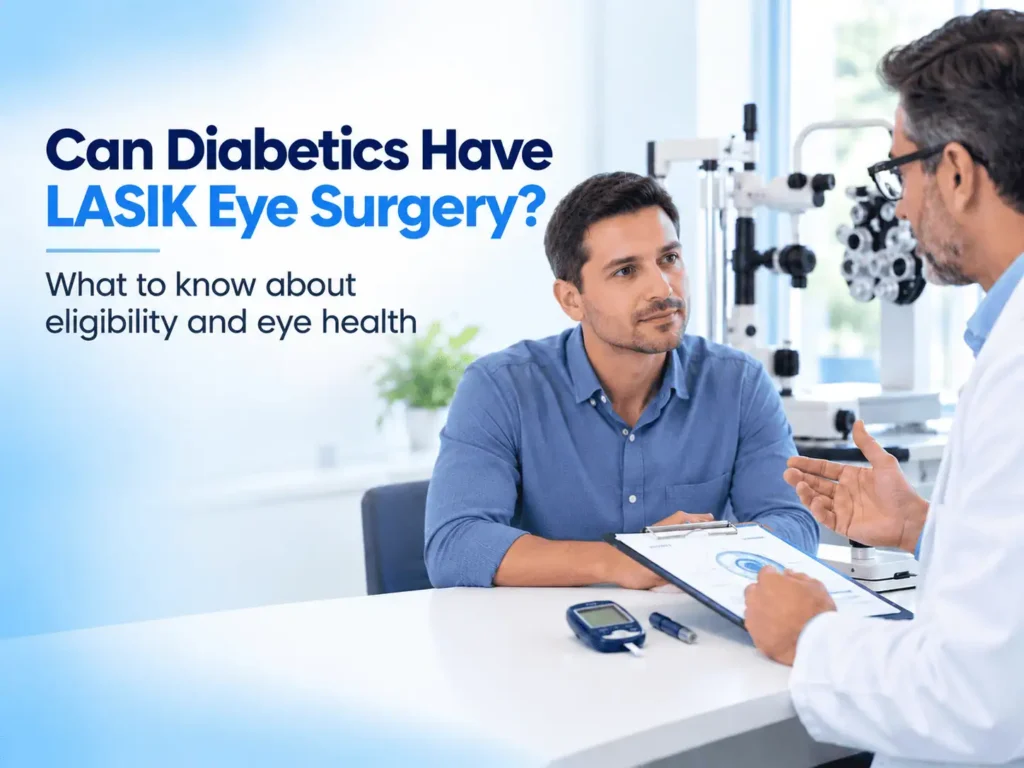
Key Takeaways:
- Stable blood sugar, a stable prescription, healthy corneas, and good overall eye health are important considerations before LASIK.
- Diabetes can increase the risk of delayed healing, infection, and dry eye symptoms after surgery.
- People who are not suitable candidates for LASIK may have other options, including PRK, RLE, ICL, or customized contact lenses.
- A comprehensive evaluation by an eye doctor is essential to determine whether LASIK is safe and appropriate for you.
Quick Answer
Some diabetics can get LASIK when their blood sugar is well controlled, their prescription is stable, and their eyes are healthy. A comprehensive eye examination and medical evaluation can determine whether LASIK or another vision correction option is safest for you.
Diabetes affects a large portion of the adult population worldwide. According to the International Diabetes Federation, 589 million adults aged 20–79 were living with diabetes in 2024. In the U.S., it affects approximately 40.1 million people, or about 1 in 8 Americans.
This makes diabetes an important consideration for people exploring vision correction procedures.
Can Diabetics Get LASIK Eye Surgery?
Having diabetes does not automatically rule out LASIK for you, but it can make candidacy more complex.
High or unstable blood sugar can affect vision, corneal health, and the body’s ability to heal after surgery. Diabetic retinopathy, cataracts, or other eye complications may also affect eligibility. Your eye doctor will assess these factors before recommending the eye surgery.
How to Manage Your Diabetes for Better Chances of LASIK?
If you have diabetes and want to get LASIK, you need to manage your condition. Your eye doctor may consider blood sugar control, medications, eye health, and overall medical history before determining whether the procedure is appropriate.
Here’s what you can do to improve your chances of getting the eye surgery:
1. Keep Your Blood Sugar Under Control
Significant fluctuations in blood sugar can temporarily change your prescription and may make your vision measurements for LASIK less reliable. Moreover, having controlled blood sugar levels can also support healthier healing after surgery.
2. Follow Your Diabetes Treatment Plan Properly
Take insulin, oral medications, or other diabetes treatments exactly as prescribed by your healthcare provider. Do not change or stop your medication without medical advice. Good diabetes management can help reduce the risk of complications that may affect your eyes and recovery.
3. Monitor Your Glucose Regularly
Regular blood glucose monitoring helps your healthcare team identify changes in your diabetes control. Your eye surgeon may want to review your recent blood sugar history or A1C level as part of your preoperative evaluation.
4. Maintain a Balanced Diet
A balanced diet can support better blood sugar management and overall health. Focus on nutritious foods that fit your diabetes care plan.
5. Stay Physically Active
Regular physical activity can help support blood glucose control and cardiovascular health. Follow an exercise routine according to your diabetes management plan.
6. Schedule Regular Eye Examinations
Routine eye examinations are particularly important when you have diabetes. Your eye doctor can check for diabetic retinopathy, cataracts, glaucoma, and other changes that may affect your chances for LASIK.
7. Get Medical Clearance When Recommended
Your LASIK surgeon may recommend medical clearance from your diabetes care provider before surgery. This can help confirm that your diabetes is adequately controlled and that there are no medical concerns that could increase surgical or healing risks.
What Risks Can LASIK Eye Surgery Present for Diabetics?
Diabetes can affect the cornea, immune response, and healing process. As a result, diabetic patients need to take additional measures when undergoing LASIK.
Below are some potential complications to be aware of:
- Healing May Take Longer
Diabetes can affect the body’s ability to repair tissue, potentially slowing corneal healing after the surgery.
- Infection Risk May Be Higher
Diabetes may affect your body’s ability to fight infection, particularly when blood sugar is poorly controlled. Although infection after LASIK is uncommon, your surgeon will consider your individual risk and provide proper postoperative care.
- Dry Eye Symptoms Can Be More Noticeable
LASIK can temporarily affect corneal nerves and tear production, leading to dry eye symptoms during recovery. Diabetes may also affect corneal sensitivity and the ocular surface, so some patients may experience more noticeable or prolonged dryness. [Source: PubMed]
Type 1 vs. Type 2 Diabetes: What Changes for LASIK?
The type of diabetes you have does not automatically determine whether you can undergo LASIK. But it’s still better to know in what ways Type 1 and 2 may affect your chances for LASIK.
| Consideration | Type 1 Diabetes | Type 2 Diabetes |
|---|---|---|
| Typical Onset & Duration | Often diagnosed during childhood or young adulthood, so some patients may have lived with diabetes for many years by the time they consider LASIK. | Often diagnosed later in life, although the duration can vary considerably between patients. |
| Blood Sugar Control | Blood glucose management can be more complex for some people, making stable glycemic control particularly important before LASIK. | Blood glucose can be controlled with appropriate treatment, but poor management can still affect your eligibility and recovery. |
| Retinal & Microvascular Health | A longer duration of diabetes might increase the risk of diabetic retinopathy and other microvascular complications. | Screening should assess for diabetic retinopathy as well as age-related eye conditions that could affect visual outcomes. |
| Corneal Health & Healing | Long-term diabetes may increase the risk of changes in corneal sensitivity and slower healing after LASIK. | Poorly controlled diabetes can also delay corneal healing. |
| LASIK Candidacy | Candidacy requires stable blood sugar control and careful evaluation for eye complications. | Candidacy requires stable blood sugar control and screening for diabetic retinopathy, cataracts, and other conditions that may affect the outcome. |
| Overall Considerations | Your surgeon will consider diabetes duration, glucose control, retinal health, corneal health, and overall eye health. | Your evaluation will consider glucose control, diabetes-related complications, age-related eye conditions, and overall eye health. |
Other Vision Correction Options for Diabetics
If getting LASIK is not right for you, it doesn’t necessarily mean you have no options. Depending on your prescription, corneal health, lens condition, and overall eye health, your eye doctor may discuss other ways to correct your vision.
- Photorefractive Keratectomy (PRK)
PRK reshapes the cornea without creating the corneal flap used in LASIK. It may be considered for some patients who are not suitable candidates for LASIK because of corneal thickness or other factors. However, having diabetes may affect healing after PRK as well, so candidacy still requires careful evaluation.
- Refractive Lens Exchange (RLE)
Refractive Lens Exchange (RLE) replaces the eye’s natural lens with an intraocular lens to correct certain refractive errors. It may be considered for some patients, particularly those with age-related lens changes. However, diabetes-related eye conditions must be evaluated before proceeding.
- Implantable Collamer Lens (ICL)
ICL involves placing a specialized lens inside the eye without removing the natural lens. It can be an option for certain patients who have prescriptions or corneal characteristics that make corneal laser procedures less suitable.
- Customized Contact Lenses
Customized contact lenses can provide clear vision without permanently changing the cornea or natural lens. They may be a practical alternative for people who are not candidates for surgery or prefer a non-surgical approach to vision correction.
Get a Free LASIK Consultation at InSight Vision Center
If you have diabetes and are considering LASIK, you do not have to determine your eligibility on your own.
At InSight Vision Center, our eye doctors can perform a comprehensive evaluation of your eyes, review your vision prescription and medical history, and look for any diabetes-related eye changes that could affect treatment.
Take the Next Step Toward Clearer Vision
If you are wondering if diabetics can have LASIK eye surgery, a personalized evaluation with us is the best place to start.
Schedule Your Free LASIK Consultation at InSight Vision Center
Why do I need to keep my blood sugar under control for LASIK?
When blood glucose levels fluctuate, your vision and refractive measurements can temporarily change. If your prescription changes because of unstable blood sugar, LASIK measurements may not accurately represent your long-term vision needs.What blood sugar level is needed for LASIK?
Most eye surgeons may recommend that your A1C level be around or below 7.0%. But other factors like overall glucose control, prescription stability, and the presence of diabetes-related eye complications also matter when evaluating your candidacy for LASIK.Can I have LASIK if I have diabetic retinopathy?
LASIK may not be recommended if you have significant or active diabetic retinopathy. The condition and its severity must be evaluated first. Your eye doctor may recommend treating or monitoring the retinal condition before considering vision correction surgery.Does diabetes affect LASIK recovery?
Yes. Diabetes can affect the cornea and the body's healing response, potentially making recovery slower or increasing the risk of complications.Is PRK safer than LASIK for diabetics?
Whether PRK is safer than LASIK for diabetics depends on the individual. PRK does not require a corneal flap, but it still requires the cornea to heal after surgery. Your surgeon will consider your diabetes control, corneal health, and other risk factors before recommending either procedure.What happens if I am not eligible for LASIK because of diabetes?
If LASIK is not suitable, you may have other options depending on your eyes and prescription. These can include PRK, ICL, RLE, or customized contact lenses. Your eye doctor can better explain which alternatives are appropriate after a comprehensive evaluation.This article is general information and isn't a substitute for an eye exam.