
Binocular Vision Dysfunction: Causes, Symptoms, & Treatments

Blurred or double vision, frequent headaches, or difficulty focusing while reading might seem unrelated. But they can all indicate a condition called Binocular Vision Dysfunction (BVD). This often-overlooked disorder can cause visual discomfort and problems with daily activities. Fortunately, BVD is manageable and curable if you contact the right expert!
At InSight Vision Center, we assist patients in Fresno, California, in understanding and managing BVD with accurate diagnoses and advanced treatment options.
Quick Answer
Binocular vision dysfunction (BVD) is a condition where the eyes don’t align or coordinate properly, sending mismatched images to the brain. This causes symptoms like blurred or double vision, headaches, eye strain, and dizziness. It’s treated with vision therapy, prism lenses, or in some cases Botox injections to relax overactive eye muscles, and is diagnosed through a comprehensive eye exam that tests alignment, coordination, and depth perception.
What Is Binocular Vision Dysfunction?
Binocular vision dysfunction, or BVD, happens when your eyes don’t align or coordinate properly, which causes them to send mismatched images to the brain. This misalignment can result in blurred vision, eye strain, headaches, and even balance problems.
Normally, both eyes move together, helping your brain combine two images into one clear view. However, in people with BVD, even a slight misalignment can make it hard for the brain to merge the images. This can lead to visual discomfort and tiredness.
What Causes Binocular Vision Dysfunction?
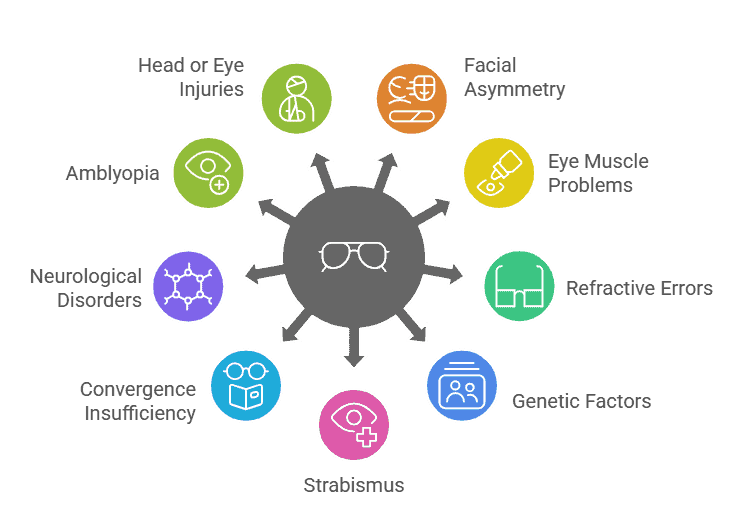
There are several underlying causes of binocular vision dysfunction, ranging from muscle imbalance to neurological or genetic factors. Check the list mentioned below to find out the root cause of your vision issue:
-
Facial Asymmetry
Slight differences in facial structure can cause uneven eye positioning, leading to chronic misalignment over time.
-
Eye Muscle Problems
Weakness or overactivity in eye muscles can make it difficult for both eyes to focus on the same point simultaneously.
-
Refractive Errors
Uncorrected refractive errors of the eyes, like nearsightedness, farsightedness, or astigmatism, can disrupt the eyes’ ability to focus together.
-
Genetic Factors
Often, genetics plays a vital role in your eye health. Inherited traits can affect eye muscle strength or coordination, increasing the risk of BVD.
-
Strabismus
Even minor cases of strabismus can contribute to binocular vision dysfunction. It is a condition where the eyes are misaligned and do not point in the same direction, causing one eye to turn in, out, up, or down.
-
Convergence Insufficiency
This occurs when the eyes have trouble turning inward during near tasks, such as reading, causing double vision and fatigue.
-
Neurological Disorders
Conditions like stroke, multiple sclerosis, or concussions can disrupt the brain’s control of eye movement.
-
Amblyopia (Lazy Eye)
A lazy eye is a vision development disorder where one eye experiences reduced vision because the brain and that eye don’t work together properly. It can impair coordination between both eyes, leading to long-term misalignment.
-
Head or Eye Injuries
Trauma can affect the muscles or nerves controlling eye movement, often resulting in BVD.
What are the Symptoms of Binocular Vision Dysfunction?
The binocular vision dysfunction symptoms can vary widely. Some people feel mild discomfort, while others experience severe vision and balance problems. Here’s what it feels like to have BVD:
Symptoms of Pain
- Eye Strain (Asthenopia) and Fatigue: After brief periods of screen time or reading, you may notice that your eyes are growing tired. This is frequently accompanied by a constriction around the eyes.
- Eye Pain: Following visual tasks that call for concentration, aching or pressure behind the eyes may occur.
- Migraines: Headaches or migraines that get worse in the evening can be brought on by repeated strain.
- Sinus Pain: Pressure from misaligned eye movement may cause discomfort in the sinuses.
- Neck, Upper Back, or Shoulder Pain: Chronic muscle tension can result from tilting or turning the head to lessen double vision.
Visual Signs and Symptoms
- Blurred Vision: Things may seem hazy or unclear when the eyes can’t cooperate.
- Double Vision (Diplopia): Two images of the same object may appear to overlap or be separated.
- Light Sensitivity (Photophobia): Exposure to bright lights can cause pain or discomfort.
- Glare or Reflection Issues: Headlights or shiny surfaces can exacerbate discomfort.
- Inadequate Depth Perception: It becomes more difficult to judge distances or capture moving objects.
- Difficulty Maintaining Eye Contact: You might unintentionally avoid direct eye contact in an effort to ease tension in your eyes due to binocular vision dysfunction.
- Head Tilt or Turn: A lot of people tilt their heads involuntarily to line up their vision.
- Difficulty With Night Vision: Driving or navigating in dim light may become stressful or unsafe.
Sensory Nonvisual Symptoms
- Lightheadedness or Dizziness: Balance may be impacted by an imbalance in eye coordination.
- Nausea: If you have persistent double vision, you may feel nauseous or confused.
- Frequent Falling: Clumsiness or a loss of balance may result from poor spatial awareness.
- Disorientation: It can be difficult to find your way around in crowded or moving areas.
- Motion Sickness: Even slight movement, like driving, can make you queasy.
- Visual Vertigo: It is the sensation that things are moving when they are not.
Reading Symptoms
- Reading Difficulties: It can be challenging to focus when words move or blur on the page.
- Fatigue with Reading: After brief reading sessions, you may feel exhausted or lose focus easily.
- Rereading for Comprehension: To understand a line, many people with BVD find themselves reading it multiple times.
- Skipping Lines: Readers who have misaligned eyes may find it easy to become disoriented.
- Words Running Together: Phrases may seem mixed or jumbled.
- Closing or Covering One Eye: To relieve stress, you might find yourself automatically closing one eye.
How Is Binocular Vision Dysfunction Diagnosed?
Binocular vision dysfunction diagnosis involves a comprehensive eye examination that evaluates how well your eyes align, move, and focus together.
Specialized tests, like prism assessments, eye tracking, and visual alignment measurements, help determine the level of misalignment. If needed, additional neurological or imaging tests may be done to rule out underlying causes.
Your eye doctor may also ask about your reading habits, balance, and overall visual comfort to create a complete picture of your condition.
What Are the Options of Treatment for Binocular Vision Dysfunction?
The treatment for binocular vision dysfunction varies based on the cause and severity of your symptoms. At InSight Vision Center, each treatment plan is tailored after a thorough vision exam.
-
Treatment for Vision
A systematic eye exercise program improves visual focus and boosts coordination. It helps the brain relearn how to align images from both eyes for comfortable single vision.
-
Corrective Prisms and Lenses
Special prism lenses are often prescribed to properly align images and reroute light. Almost instantly, they can lessen headaches, light-headedness, and double vision.
-
Botox, or OnabotulinumtoxinA
Controlled Botox injections can sometimes relax overactive eye muscles. It improves eye balance and lowers strain.
InSight Vision Center: Get Your Treatment Plan
To evaluate your visual health and identify the cause of binocular vision issues, we at InSight Vision Center provide comprehensive eye exams. Our doctors assess your eyes’ alignment and movement during the exam. They also check your eye muscle strength and coordination. Additionally, your ability to focus and perceive depth is tested.
If there are any indications of a structural or neurological imbalance, they are spotted and analyzed.
Restore your vision balance and life’s confidence
Visit InSight Vision Center in Fresno, CA for an Effective BVD Treatment Guidance
Frequently Asked Questions About Binocular Vision Dysfunction
Who is most likely to develop binocular vision dysfunction?
People with a history of facial asymmetry, eye muscle weakness, head trauma, or neurological issues are more susceptible to BVD. It may also become more noticeable around age 40 as eye coordination changes.How does BVD impact daily activities?
BVD can make reading, driving, and walking difficult. Many patients describe feeling dizzy, anxious, or unsteady when doing simple visual tasks.Can children have binocular vision dysfunction?
Yes. Children can have BVD. Those affected by this visual issue often struggle with reading, attention, or coordination. Early diagnosis can prevent long-term learning or focus problems.How soon can I notice improvement after BVD treatment?
Most patients start to feel relief within a few weeks of beginning therapy or using prism glasses, but full adjustment may take several months.Is BVD inherited?
In some families, genetics play a role in eye muscle imbalance, but injuries or environmental factors also contribute significantly.Can you drive safely with BVD?
Driving may be difficult because of poor depth perception or double vision. It’s important to consult your eye doctor before driving regularly.Can an optometrist diagnose BVD?
Yes. A qualified optometrist or ophthalmologist can diagnose BVD using specialized tests that measure eye alignment and coordination.Is binocular vision dysfunction common?
Yes. Experts estimate that 10% to 20% of the population experiences some degree of BVD, though it often goes undiagnosed because symptoms mimic other conditions.Can a brain injury lead to BVD?
Yes. Traumatic brain injuries can disrupt the neural signals that control eye movement, leading to BVD symptoms.Can BVD be mistaken for other conditions?
Yes. Because it shares symptoms with migraines, vertigo, and even ADHD, many people are misdiagnosed before they get proper binocular vision testing.This article is general information and isn't a substitute for an eye exam.